Joyfulness & precision – step inside the home of interior designer BEATA HEUMAN, where delicate details and beauty fill every corner. Her philosophy that ‘every room should sing’ runs through all her work — including her Victorian townhouse in London, where she lives with husband John and daughters Gurli and Alma. We sat down to talk about her design practice, building a successful business while raising small kids, and how to elevate and balance your own space.
WORDS AND ART DIRECTON: BEA HELLMAN, PHOTOGRAPHY: MIRA WICKMAN
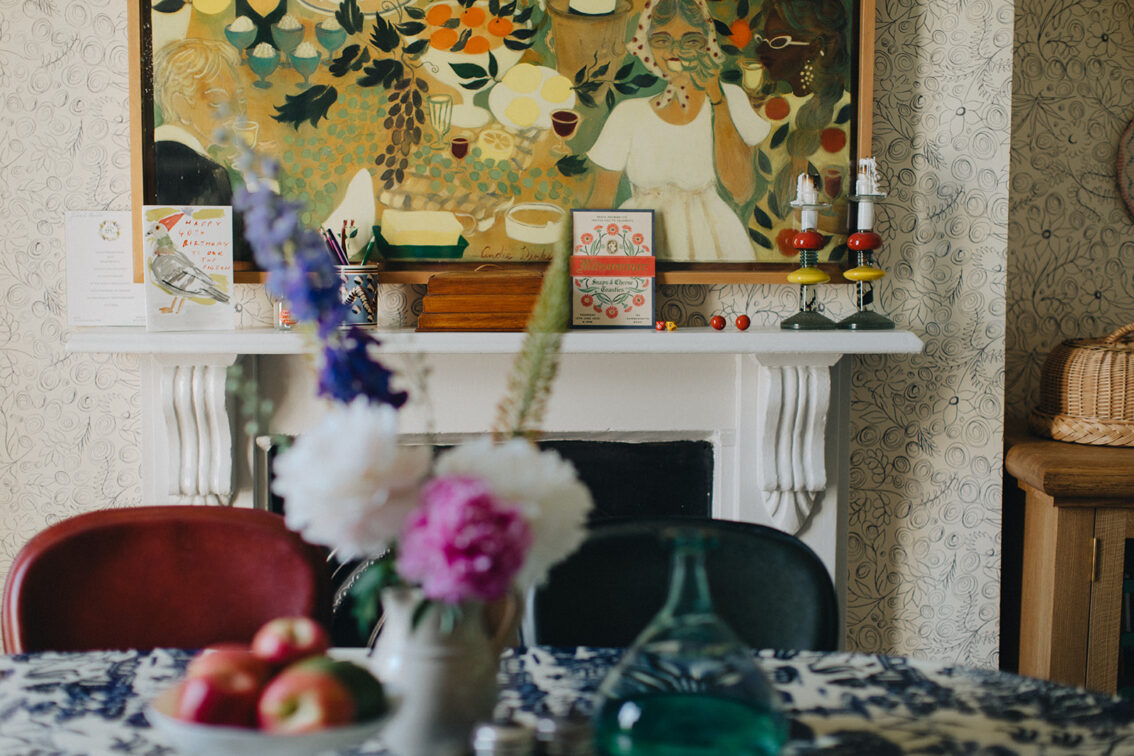
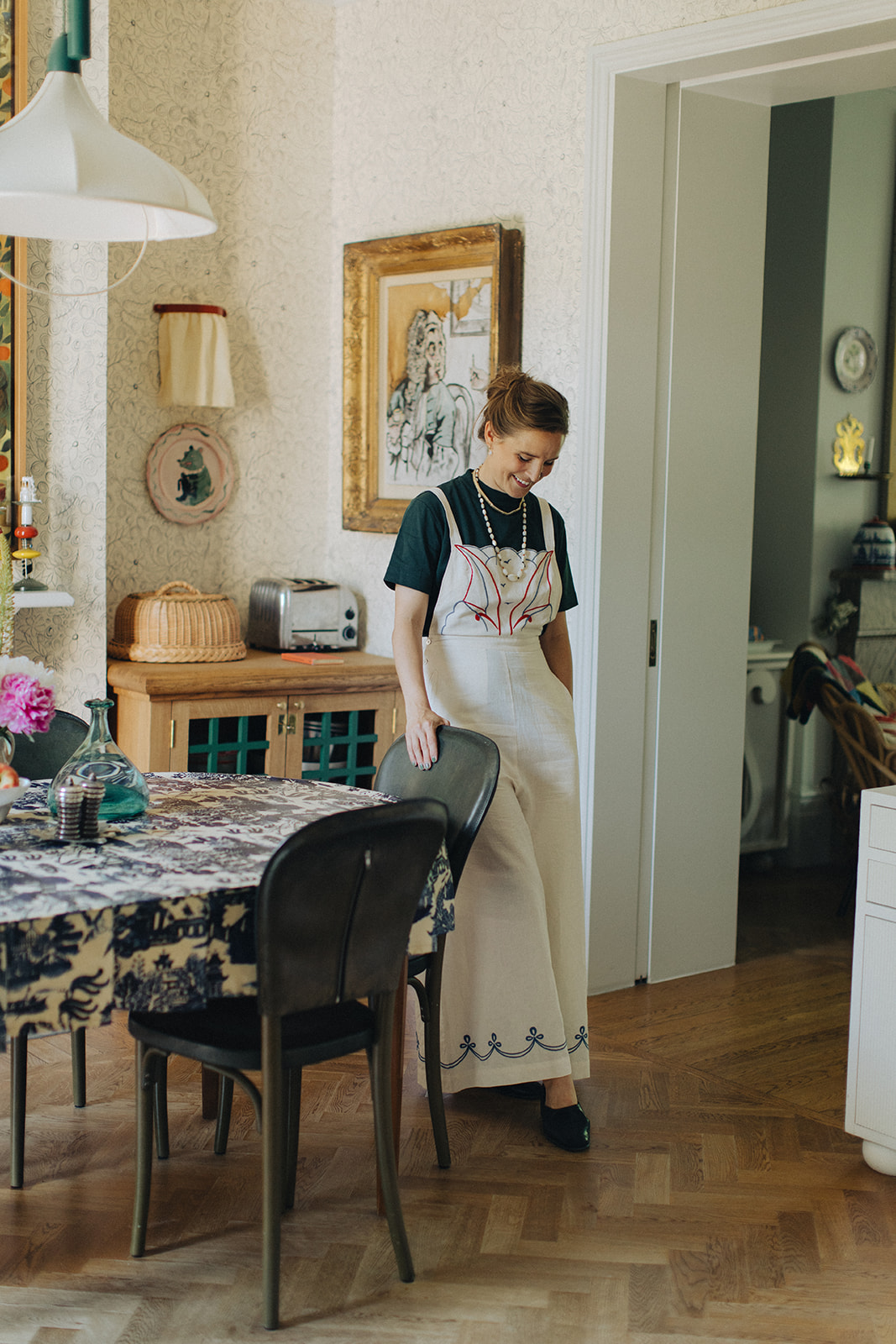
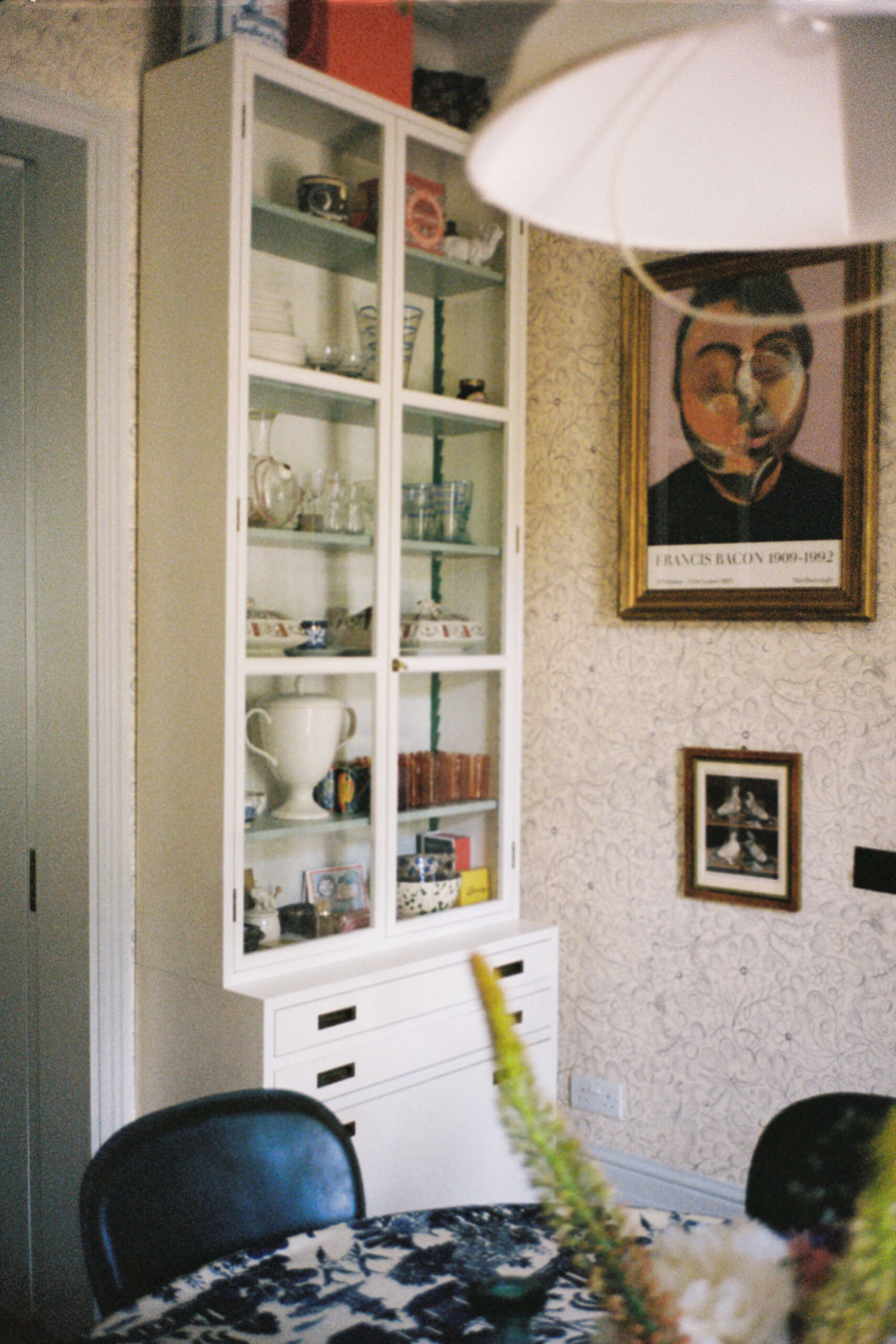
Beata in the dining room. Bespoke pieces either side of the chimney breast: on the right is a surface for the toaster and breadbasket. Around the dining table sit bentwood chairs with zipped leather covers. Willow oil cloth on the table. In the corner Cross Lap cabinet.
Hello Beata, so lovely to be here. If other people were to describe you, what would they say?
“Among my friends, my nickname is Detective Heuman, mainly because when I focus on something, I don’t miss a detail, and I can probably come across as a bit intense. Attention to detail is just part of who I am, especially in my work. The other big part of me is that I’m very social and I always try to make things the best they can be, whether it’s a meal, a gathering, or just an ordinary evening. For me, interiors are part of that too: I believe a beautiful room enhances your life. I want life to be enjoyed as much as possible, not necessarily with a big party, but simply by creating spaces and moments that feel special.
That’s beautiful. Sounds like a life philosophy to live by.
“A little bit, yes. For me, it’s also about listening. Of course, there are always things I could do better, but I try to learn from my mistakes and from what people around me are saying. When I was younger, I used to worry a lot about what people thought of me. I could be a bit daring and push boundaries, but if someone didn’t like me, I’d get anxious. I think that comes from my school years, when I was in primary and middle school, I didn’t have many friends and was even a bit bullied. If someone in class disliked me, I’d be really upset, and I struggled to let it go.
That sensitivity has always been there, but now it just expresses itself in different way and it makes me reflect on how others experience me. If I say something that didn’t land right, I’ll think about it afterwards and ask myself, Did I go too far? Was that actually funny? That kind of self-reflection is still very much a part of who I am.
How would you describe your design aesthetic?
“I’d say it’s layered, with a sense of humour and a clean feel. I like things that are practical and easy to live with, and I think a lot about how a space functions. Early on, we worked on many small rooms where everything had to earn its place, and that shaped how I design. I try not to be influenced by trends — it’s more about creating spaces that feel timeless and personal.
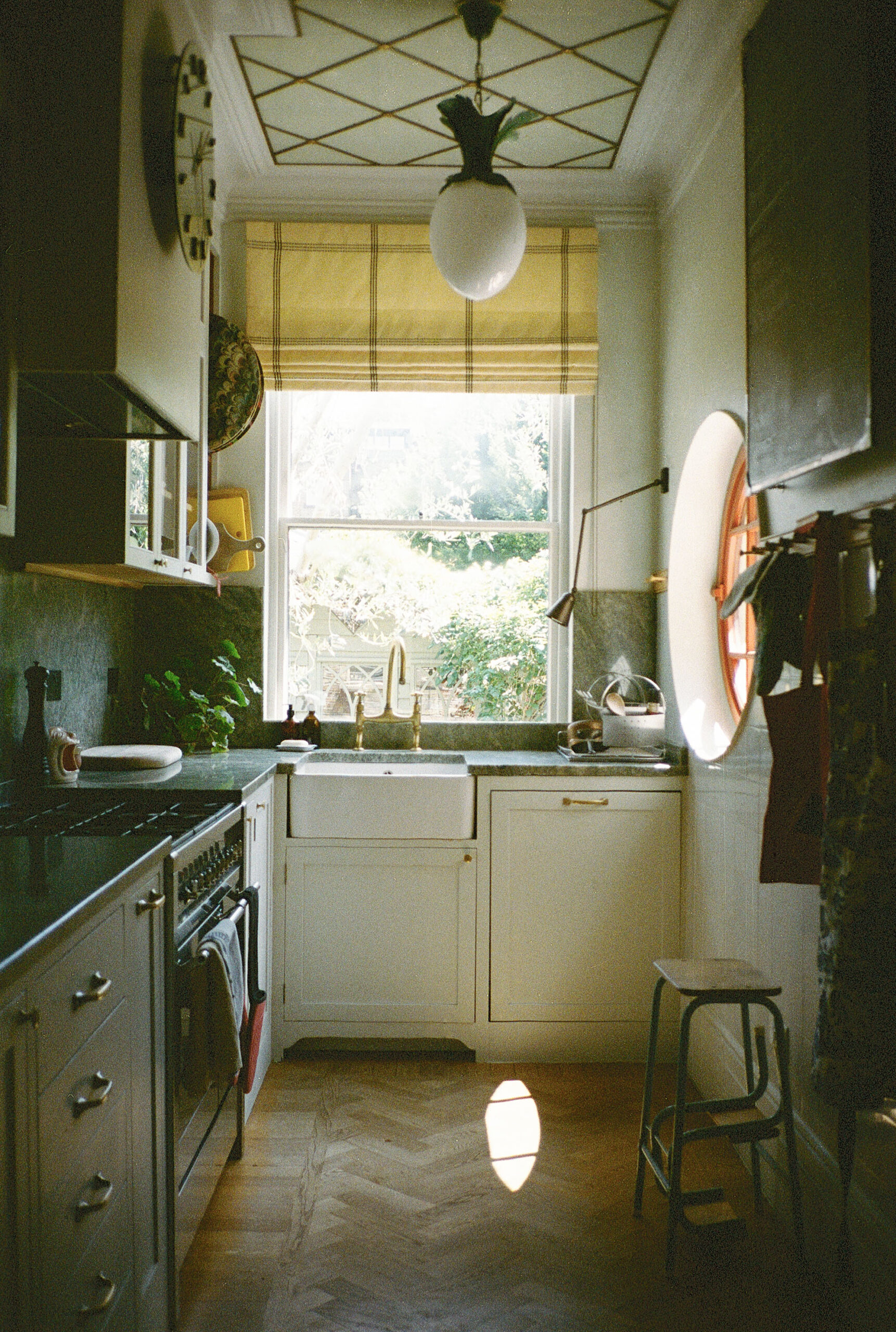
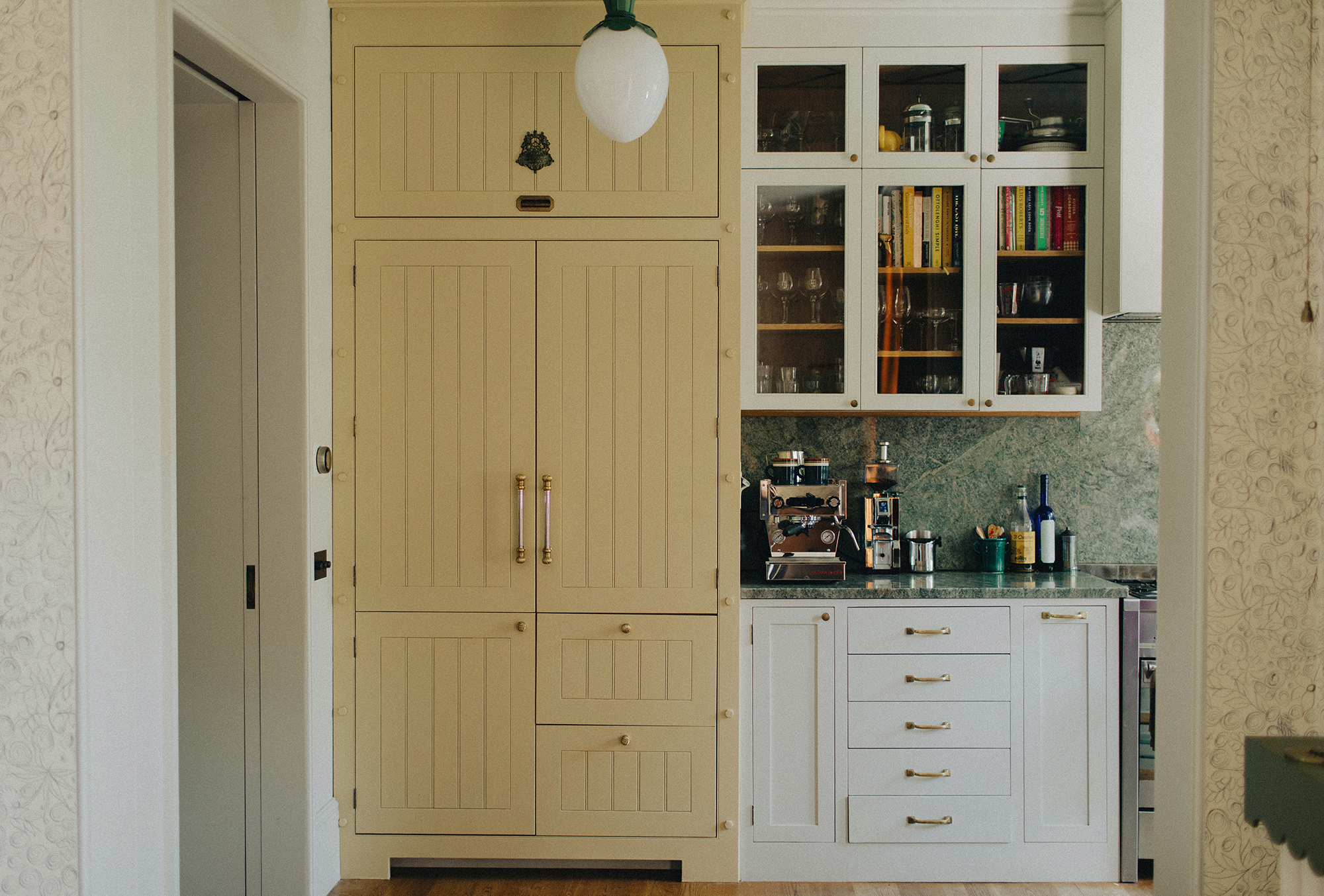
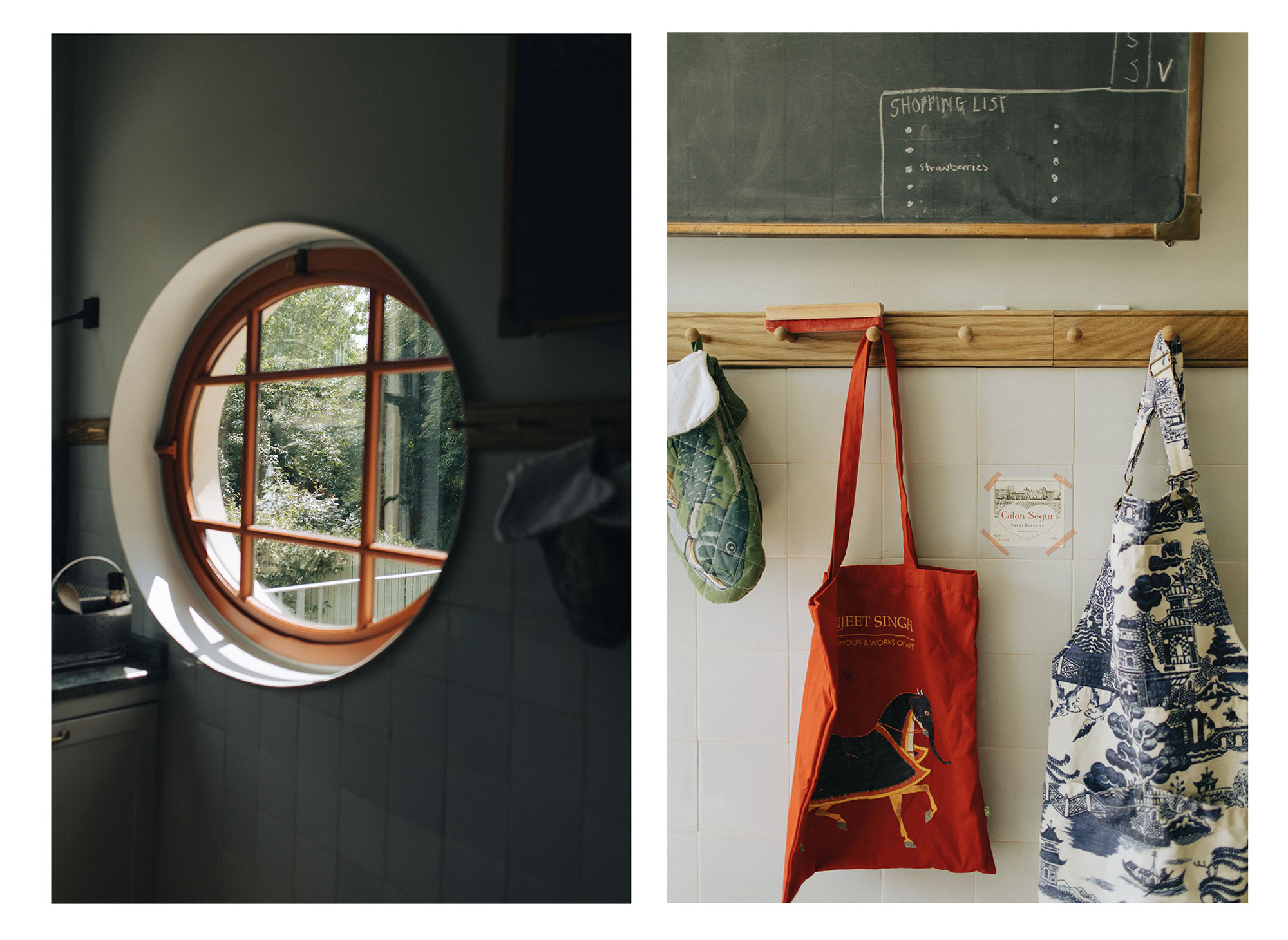
The kitchen features a glass ceiling inspired by European patisseries and a roman blind in the fabric Insjöns Smör. The
kitchen unit is painted in Wheatsheaf, from The Dependables colour collection. Dodo egg pendant is designed by Beata.
“I always try to make things the best they can be, whether it’s a meal, a gathering, or just an ordinary evening. For me, interiors are part of that too: I believe a beautiful room enhances your life. I want life to be enjoyed as much as possible, not necessarily with a big party, but simply by creating spaces and moments that feel special.’
Building your interior design practice Beata Heuman, what’s been key to your success?
“I think with experience you learn. Part of it is realizing you have to trust the people you work with and give them freedom. Once you decide to build a team because you want to achieve more, you can’t hold on to everything yourself, you have to let go. I’ve found that quite difficult at times. When my husband John joined the business, it felt completely different because I trust him fully. With him, it wasn’t hard to hand things over. For me, trust is the key. It takes me a while to get there with people, but once I do, it’s actually a huge relief to pass responsibilities on.
Would you say that letting go, has been the most challenging part?
“Yes, definitely. It’s all about the people you have working with you. It’s not very fun sitting alone doing everything by yourself. Building the right team is a huge job, and honestly, it’s probably the most important part of running a successful business. Both John and I put a lot of thought into how to keep improving the business. Anyone on the team can suggest an idea, and we’ll respond quickly. Because we don’t have outside investors, we can be very agile, change can happen fast. We’re both very driven to keep moving things forward and making things more efficient.
When you first moved to London, how was it?
“I just thought it was a lot more fun here, that people were more fun, more unexpected things were happening, and people dressed in more interesting ways. Eccentricity was really celebrated in England. Individual expression was celebrated. That was 21 years ago now, but I still think it’s true.
And do you still feel that way today, that its more fun here?
“Yes, absolutely. London especially is full of surprises, particularly in the people you meet. It’s one of the reasons I think it’s one of the best cities in the world to live in. It’s such a melting pot. Even compared with New York, where I’ve spent some time, London feels more connected, people come from everywhere, America, Europe, all over. It’s so dynamic. It’s not perfect, of course, but if you’re interested in people, I think it’s one of the most exciting places to be.
So you’re never moving back to Sweden then?
“Well, we have the house and the farm in Sweden, which is such a different way of life. My ideal scenario would be to do both. I don’t think I’d ever move back to Stockholm, probably not to another city either. But the countryside, yes, I love it. It’s so different from life here in London. Right now it’s not really possible, because our children are in school. But when they’re older and have moved out, I could definitely imagine spending more time there. Half the year in Sweden, half here, that would be perfect.
Glass cabinet with essentials in the dining room.
Tell me about this house.
“We bought it a while ago, it was built in the 1860s. The street itself has a lot of houses from that period. There are a few older ones further down by the river, some 18th-century homes, but I don’t think there are many pre-18th century buildings here.
How did it look when you moved in?
“It was in good shape, but we made some big changes. We did an extension at the back. Originally, the kitchen was where the guest room is now, and the garden was bigger. We wanted the kitchen on the first floor, which I think is the nicest floor of the house, but to make it work we had to extend a little. That extension created the terrace, and it allowed us to put the guest room underneath it.The garden ended up a bit smaller, but we also gained space for a laundry room. At that time, we were using the lower floor as our office, so we even added a little kitchenette here.
For how many years did you have the office here?
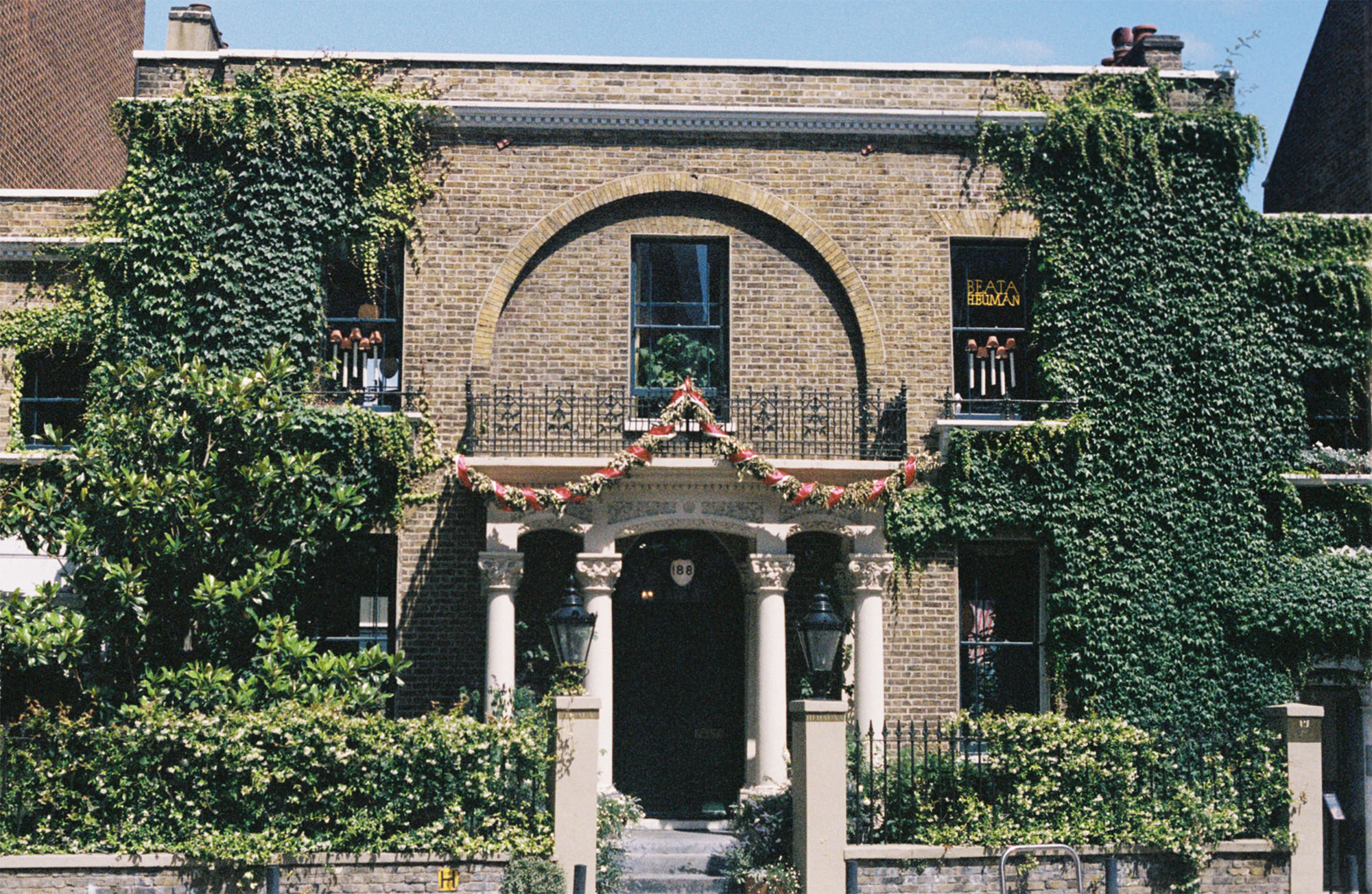
“Only for a couple of years, right at the beginning. Actually, at the very start I worked from my flat. When John and I got married, we sold our separate flats and bought this house together. Once we moved into this house, I had two people working here with me, then hired another, and then one more. And I was expecting my second child, it became too much to juggle home, family, and a growing team all in one space. So we rented an office around the corner and stayed there for about seven years. After that, we moved into the big office at 188 Hammersmith Road, which we’ve had for just over two years now.
“The house was in good shape, but we made some big changes. We did an extension at the back. Originally, the kitchen was where the guest room is now, and the garden was bigger. We wanted the kitchen on the first floor, which I think is the nicest floor of the house. The extension created the terrace.’
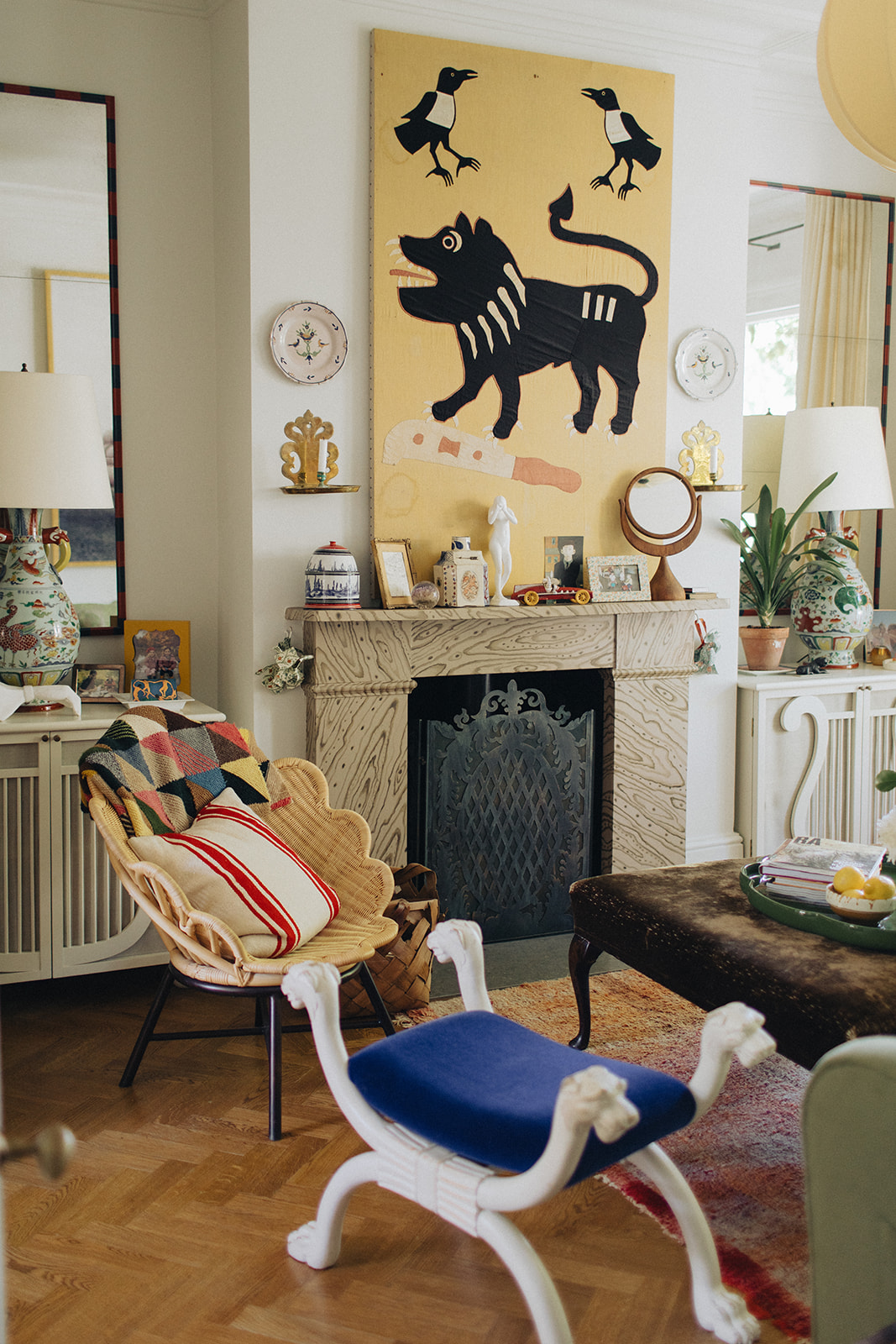
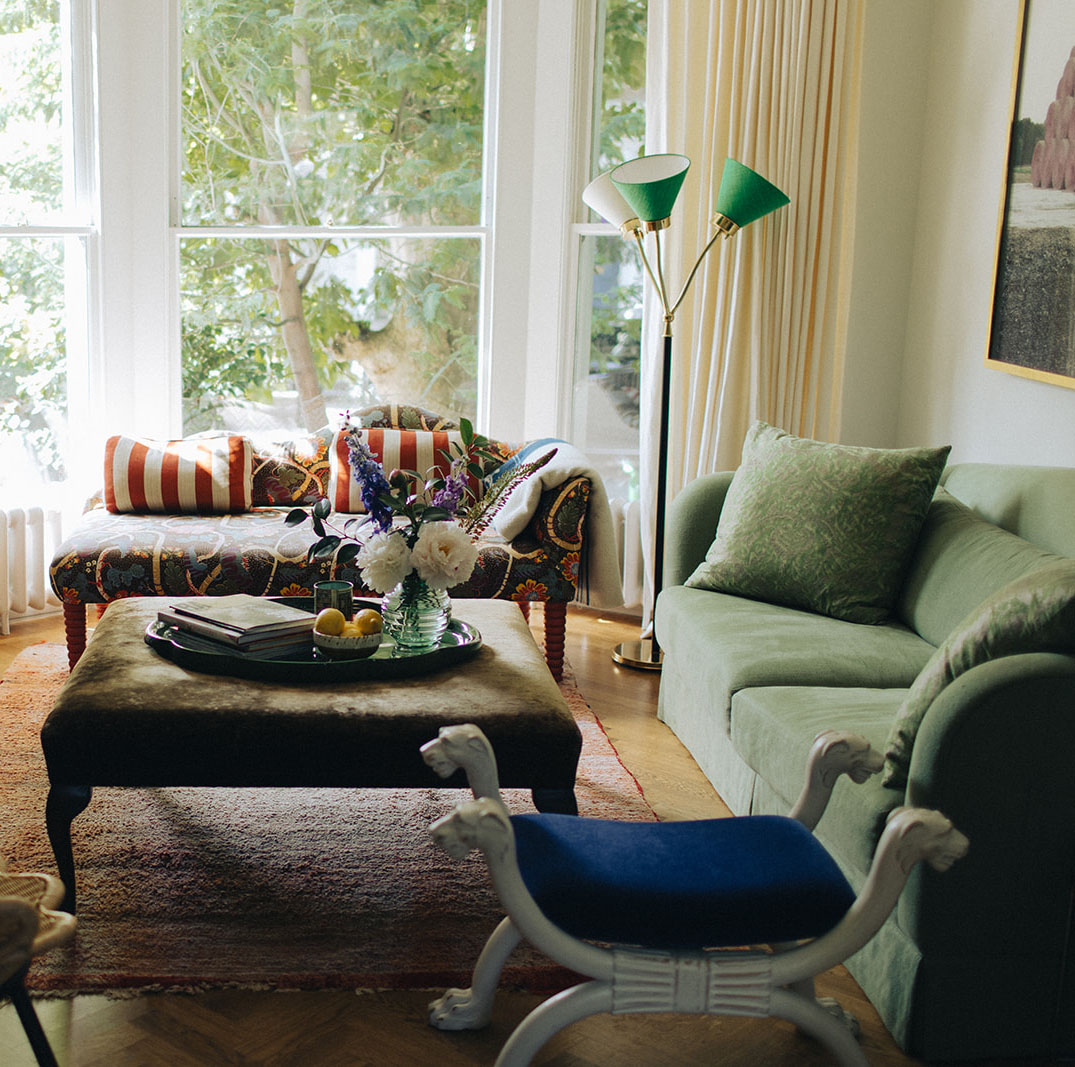
The living room blends old, new, and bespoke pieces. A vintage moroccan rug and antique banner sit alongside
a Venus chair by Soane, the Feast ottoman, Lyre storage the Wave longue sofa, and a Luckdragon stool.
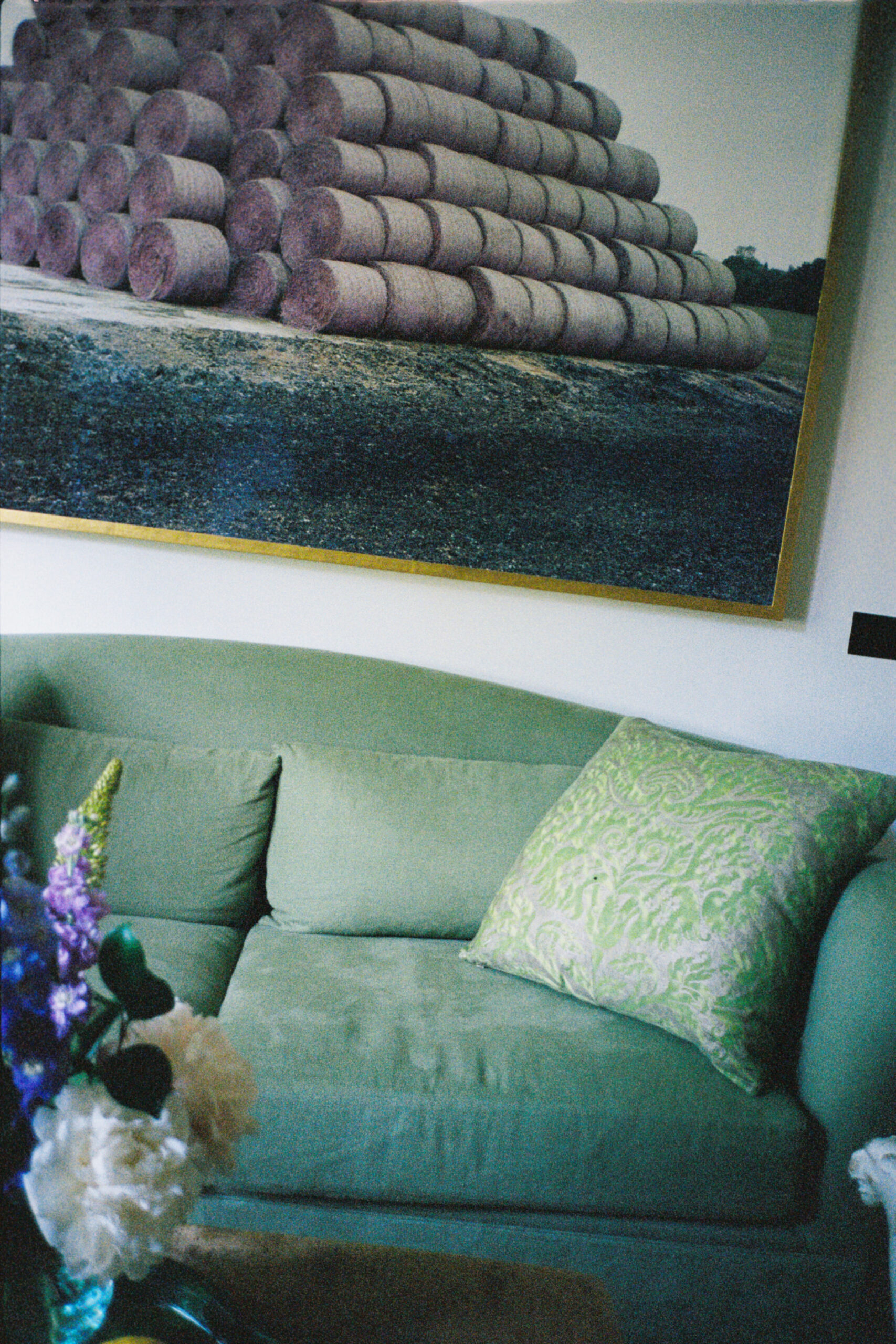
Above the sofa, Hay Bales by artist Robin Friend.
What does home mean to you?
“Right now, it feels like my whole world — the backbone of my life. My husband often says how lucky we were to find this house, and we still talk about what we might do next. It’s close to the river, so we take wonderful walks, and having grown up in the countryside, that connection to nature means a lot to me. It doesn’t even feel like the children are growing up in the city. We feel very blessed.
What was your first design idea for the company?
“I had worked for interior designer Nicky Haslam for nine years, all through my twenties, which was an incredible experience. But when I started thinking about leaving, I had no savings and a mortgage to pay, so I couldn’t just quit and hope for clients to appear. My best friend helped me get my first project. She knew I was considering leaving Nicky, and she heard that some mutual friends were looking for a designer. I met with them, pitched for the job, and got it. That project gave me the confidence to hand in my notice. It also gave me financial security, I knew I’d be okay for at least a year, even if I didn’t get any other work. In the end, the project lasted even longer. That was really the springboard for starting my own business. I was incredibly lucky with that job, the clients wanted something different, something that stood apart from what everyone else was doing. And they were generous enough to let me publish it. House & Garden photographed it and even put it on the cover.
Amazing.
“It was. And then, when that issue came out, someone from Architectural Digest in the US saw the project and called me, asking if I had another one they could feature. At the time, I was working on this house, so they photographed it, even though it felt modest compared to what usually appears in AD. But they were really enthusiastic about it.
Sounds like the perfect start, getting published that early on?
“Yes. It really snowballed from those early features, having my work published made such a difference. And then of course Instagram came along, which has been amazing. Honestly, I don’t know where my business would be without it. It’s such a direct way to reach an audience. Back then, the interior design world was dominated by an older guard, many of the established names were in their sixties or seventies. They were brilliant at what they did, but not always relatable to a younger audience. Most of their projects involved huge budgets, and the work, while inspiring, didn’t feel accessible.
So journalists were hungry for a younger designer to feature, someone doing projects that were still aspirational but felt more relevant. At the time, there weren’t many people my age with big projects under their belt. That really helped me in the beginning.
In the beginning, was it all your designs, or did you source some from others?
“Both. From my years with Nicky Haslam, I had a lot of experience with bespoke work, upholstery, furniture, wallpapers, so it was always a mix of custom-made and sourced pieces. For that first project, for example, I wanted a marbleized fabric for a sofa and wallpaper for a dressing room. At the time, you couldn’t find anything like that, so I created my own. That design became our very first product, the Marbleized Velvet, which is still our best seller today. So that first project actually launched the product side of the business as well. Alongside the bespoke pieces, I used antiques and vintage finds, which is still very much how I work.
Has it been good for you to be a Swede in Britain?
“Yes, I think so. My husband often says it’s been a big advantage. If I were English, people might have focused more on where I went to school or my background. And if I expressed myself in an unusual way, it might have seemed odd, but as a foreigner, people are more likely to accept it. The interiors world, in general, is very kind and supportive. Still, being young, Swedish, and a bit different probably gave me a hook in the beginning.
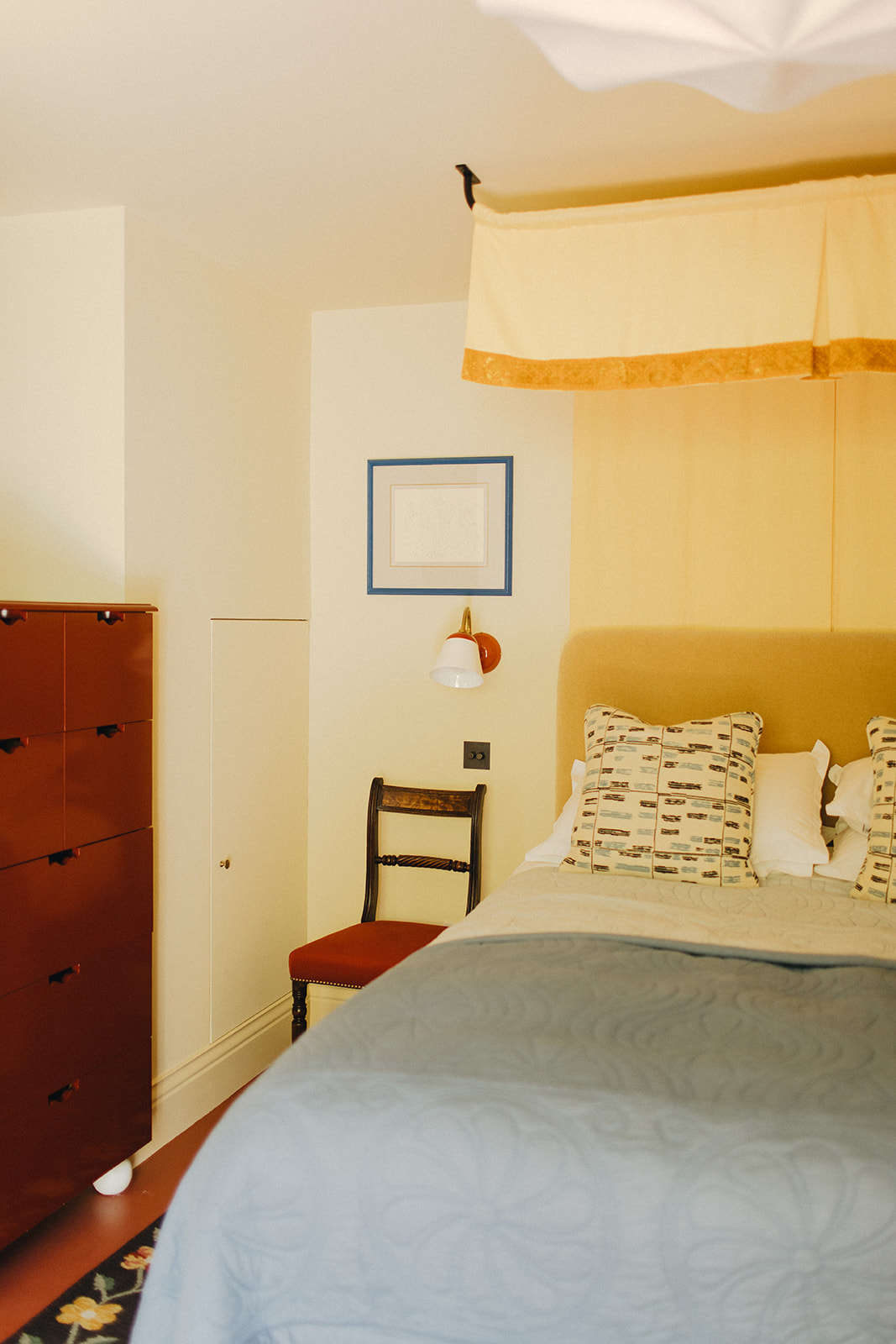
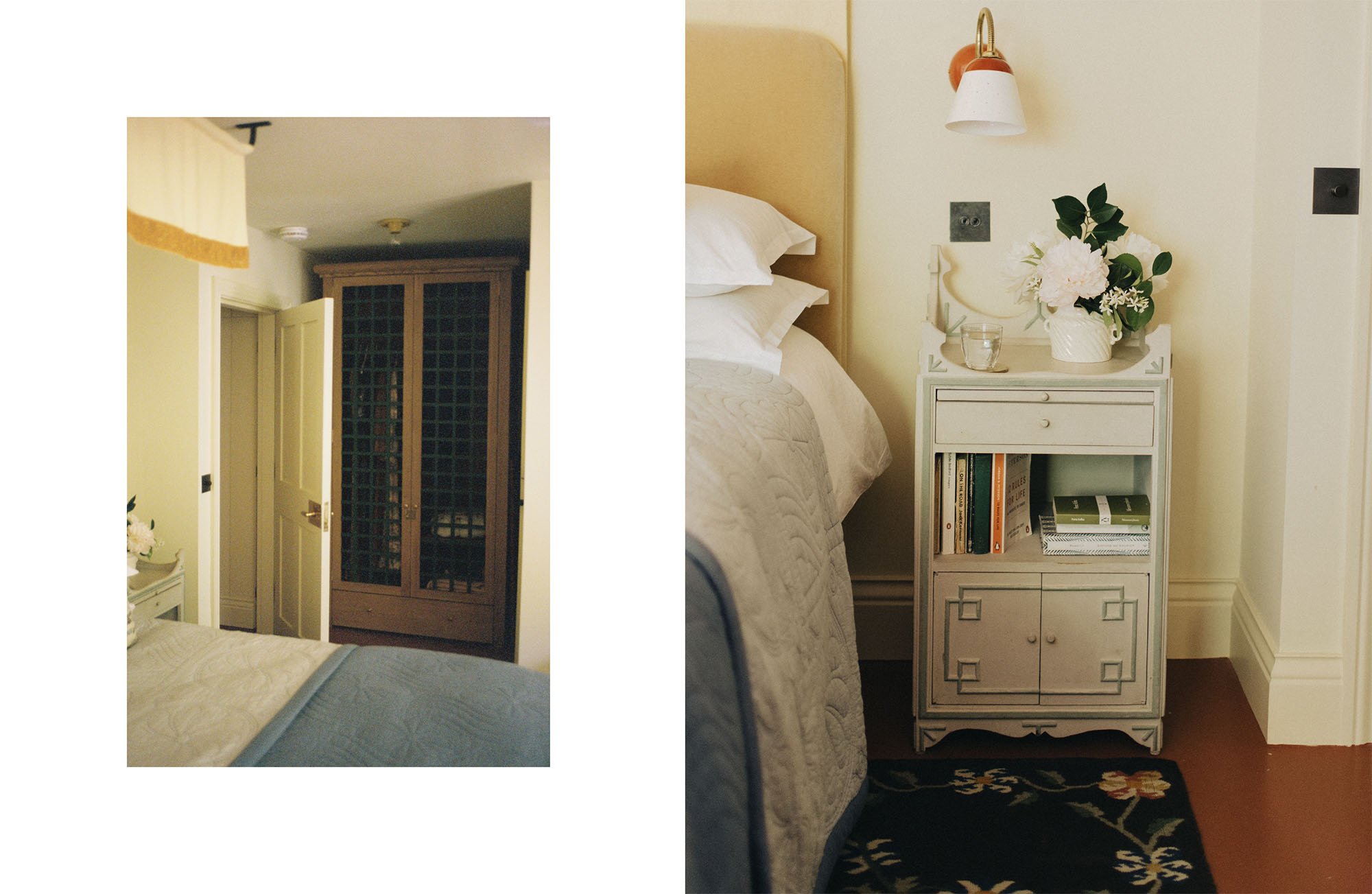
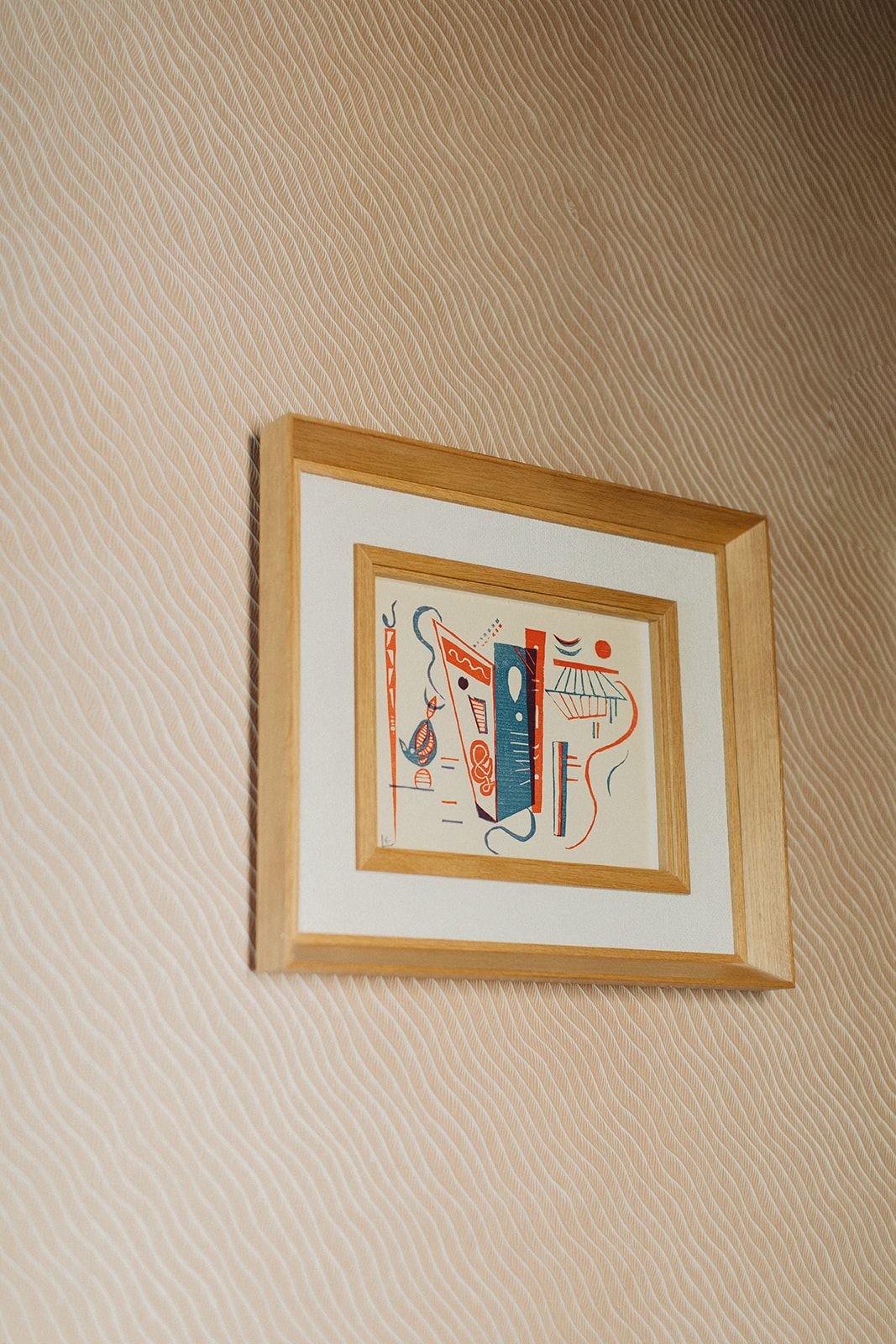
The guest room is painted in sunny colour Butter.
Left, bespoke Cross Lap Cabinet.
Above is a Wassily Kandinsky graphic print “Kompozycja” on wallpaper Eyelash Tobacco.
“I just thought it was a lot more fun here in London, that people were more fun, more unexpected things were happening, and people dressed in more interesting ways. Eccentricity was really celebrated in England. Individual expression was celebrated. That was 21 years ago now, but I still think it’s true.’
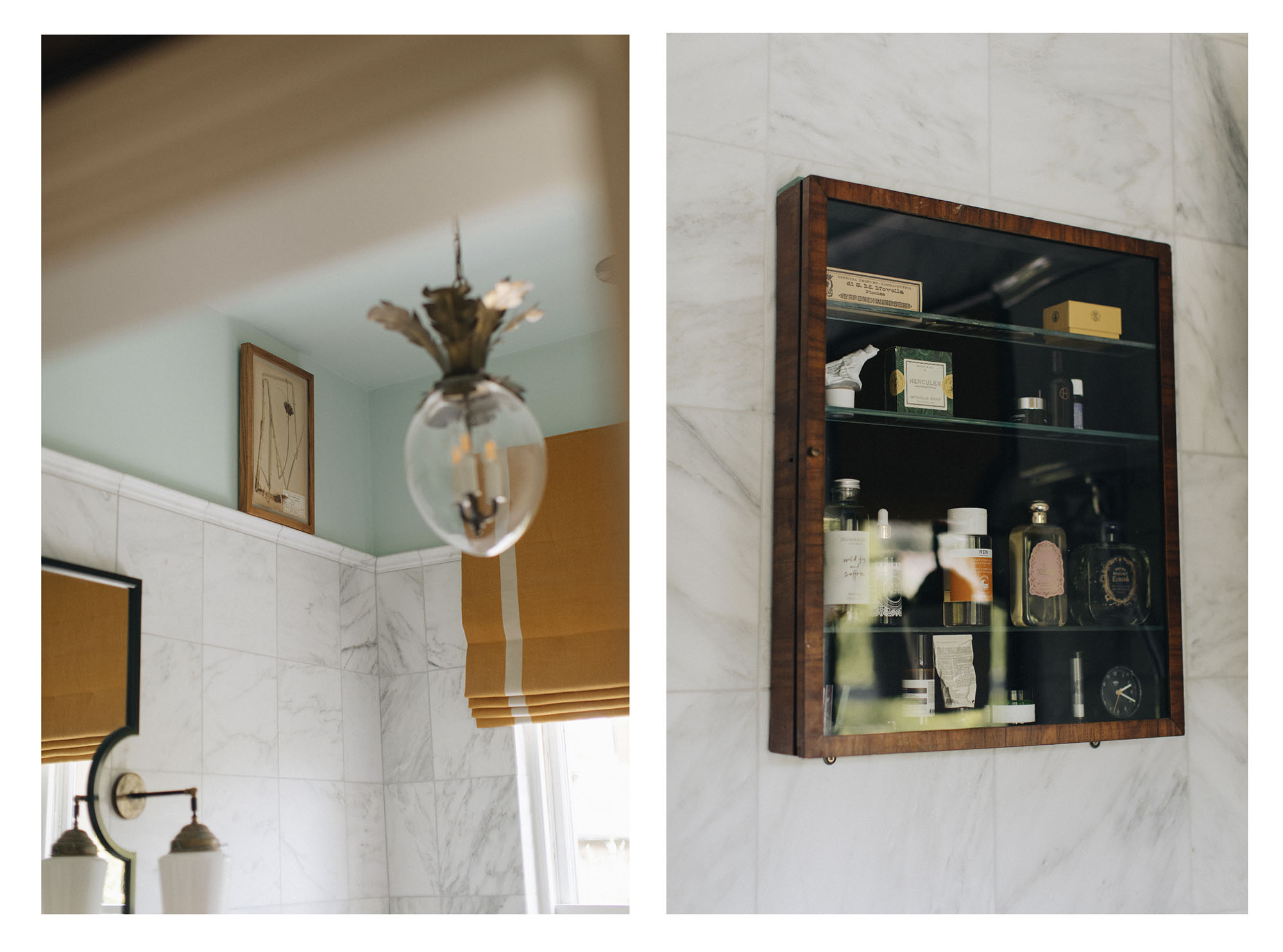
Bathroom details. A painting close to the ceiling, and a beautiful cabinet in wood.
… and at Hammersmith 188.
Tell me about your colour paint collection. How would you describe the line?
“It’s called The Dependables. The idea was to create just 24 colours. I wanted enough variation, but also to simplify the process. People get so stuck when choosing paint, they overthink it. They’ll have ten different whites and agonize over which one is right. For paint, this palette really does the job.
Which one is your favourite?
“I mean, I love them all, especially Beata White. Then there’s Wheatsheaf, which is what our fridge is painted in, that’s another favourite, Crayfish Party, a sort of bright orange, that’s the colour on the window in our kitchen. I’ve used that a lot. Chalk, it’s beige-y, a kind of white replacement. Our clients love that one.
And who lives in this house?
“My husband John, and our two daughters, Gurli and Alma, who are eight and six, and me. And now also our cat, Disco.
Sweet names, Gurli and Alma.
“Gurli was actually the name of my grandmother. It’s very unusual, it’s sort of died out, you don’t really hear it anymore. It’s interesting, because I’m not sure I would have used it if we lived in Sweden. But here, because she’s half English, I think it works beautifully. I find it very sweet in English. And then Alma, Alma was also my great-grandmother’s name. But the name came back into our minds when we watched Phantom Thread with Daniel Day-Lewis. The main character is called Alma, and that’s when we started thinking about it while I was pregnant. It tied together, since my great-grandmother was called that too.
You started building your own business and had your two kids at the same time, was it hard?
“Yes. It was quite full-on. The business was only two or three years old when I had Gurli, and at that point we were getting some really exciting opportunities. We won a project in Nantucket, which was our first project abroad. Of course, I could have said no, and I’m sure everything would have been fine if I had. But I felt I needed to do those things. So I didn’t really take much time off work. At the beginning, we didn’t have childcare until Gurli was six months old. John and I shared it, but really, everyone was working in this house. When she was asleep, I’d come downstairs and work. I didn’t really have a proper maternity leave.
Sounds really intense.
“Yes, and then I had another child 18 months later. It was a lot, especially because my body hadn’t really recovered from the first pregnancy. It had taken a while to have Gurli in the first place, so I didn’t expect it to happen so fast. John was very keen to have another baby, and now I’m glad we did, but at the time it was quite tough. My body hadn’t fully recovered, and I was also running the business.
But in a way, the business was also a relief. Once we had childcare, it gave me something else to focus on. Otherwise it would have just been breastfeeding and babies, and I needed that other dimension.
I can see that it was a lot to handle.
“Yes. When you’re in it, you’re just in it. You just do it. Having two children only 19 months apart was never going to be easy, as a woman, it’s often in your thirties and forties when everything happens, when you want to build your career, but also when you’re having children. And if I had really wanted to stay home, I would have. I loved the time with them as babies, but if I’m completely honest, I didn’t want to sit at home all day every day for a year. That wouldn’t have suited me.
Your next big launch, what is it?
“We’ve done quite a lot recently. The paint range, and then the BBC Maestro course, which was a huge project. Right now, I’m taking a bit of a break from big projects, which is quite nice. But I have started thinking about another book.
If you would pick just one single design from your collection, that´s your absolute favourite, which would you choose?
“The Movable Feast Ottoman. I’m really proud of it, it’s quite an unusual piece. I commissioned the artwork from Andie Dinkin. When I bought her work she wasn’t well known, her prices have gone up a lot now. I’m glad I could see she was going places and got her at the right time. I don’t think I’d be able to afford her now.
I commissioned this bird’s-eye view of a party scene from her, almost a surreal world. It’s designed so there’s no clear up or down, it’s not like a painting. You’re seeing it from above, so it works from any angle. Then we had it woven into a tapestry with Vandra Rugs in Ukraine. Finding them was amazing. It became our most expensive piece, it’s like an artwork, but also a piece of furniture you can really use. It’s so welcoming, so comfortable. If you have a party, everyone gathers on it. It invites people to sit together, to have fun. I think it’s quite unique, I’ve never really seen anything else like it. So I’m very proud of that one.
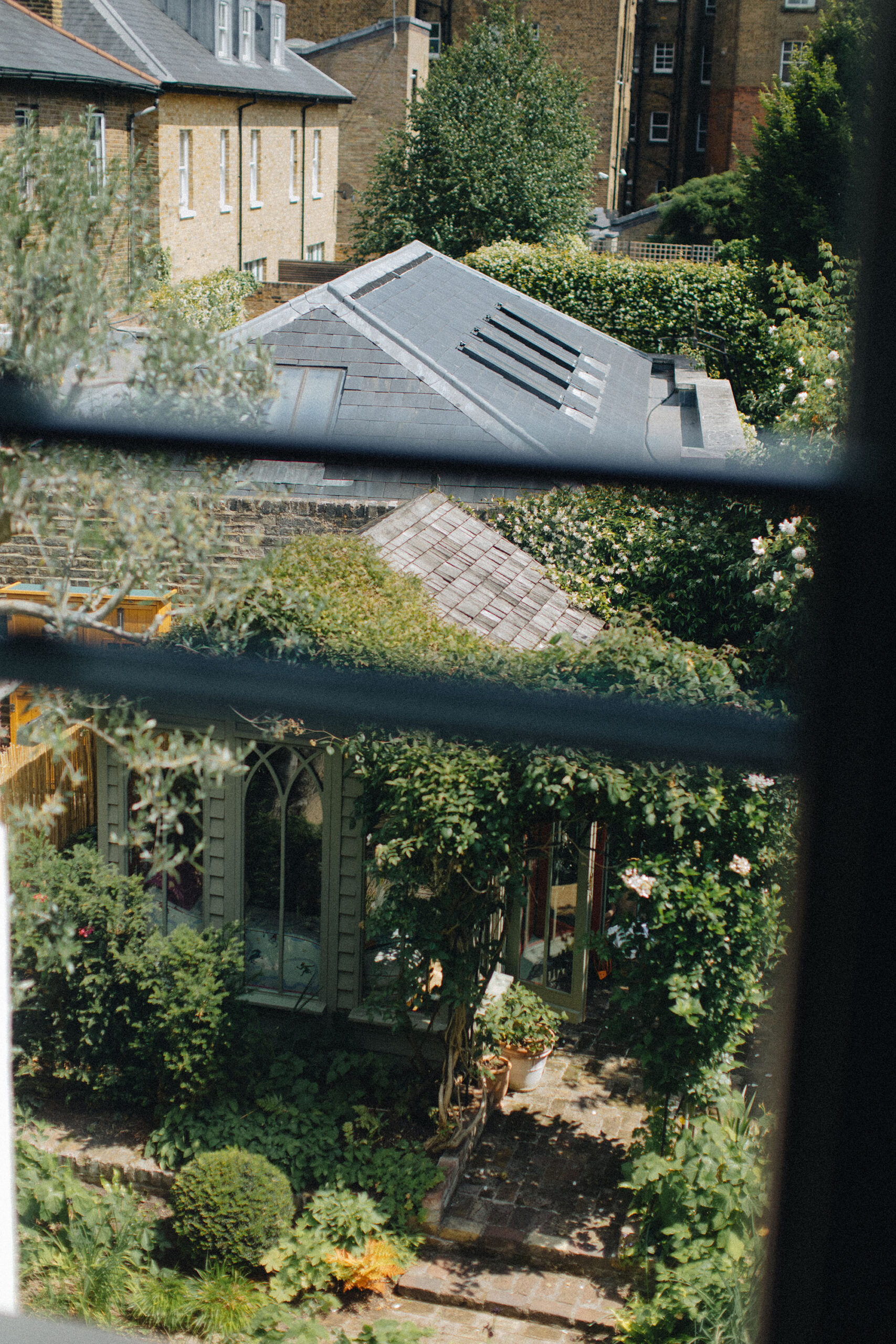
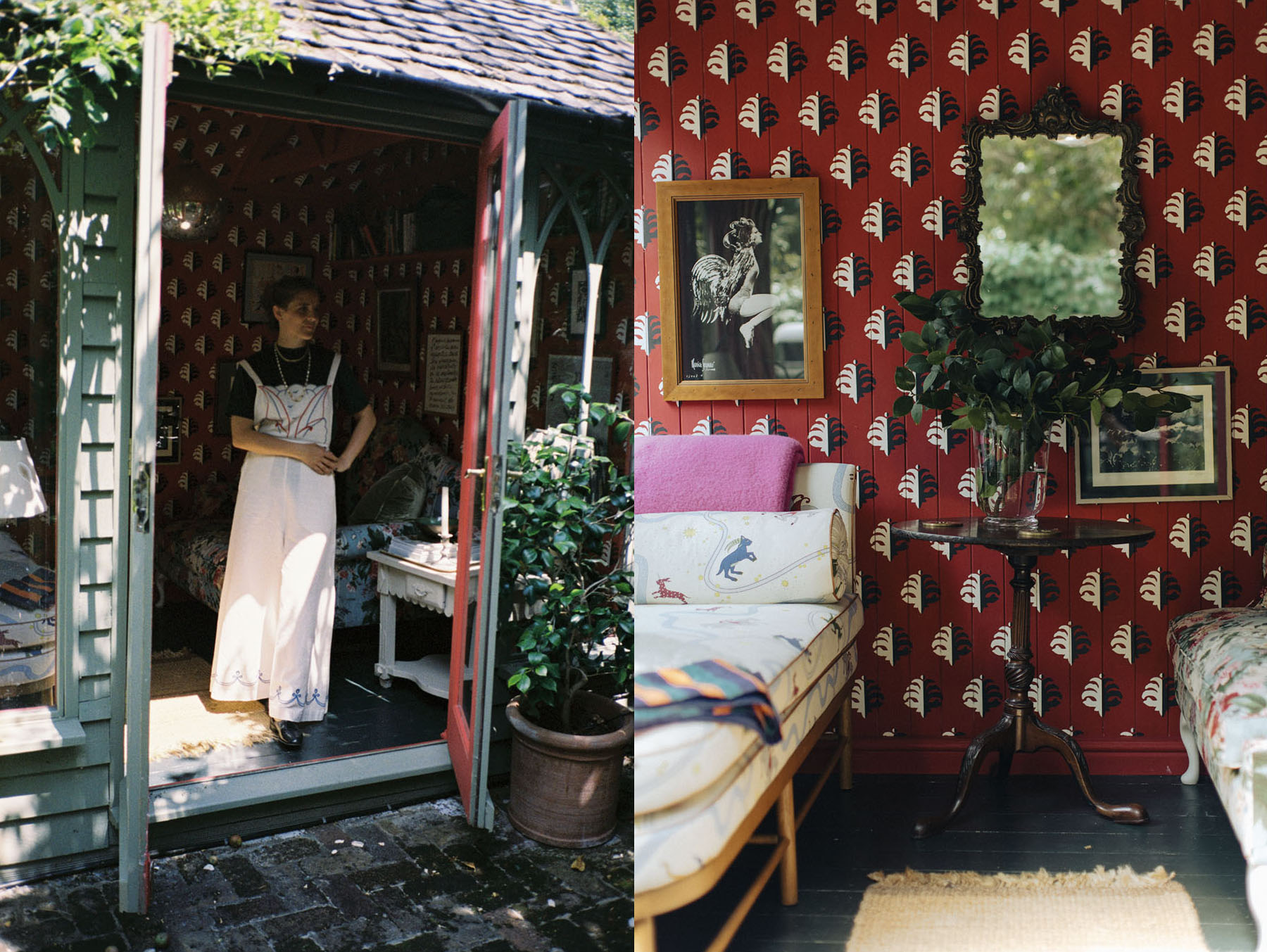
The garden house is painted green to blend in with the landscaping, in stark contrast to its cherry interior.
Okay, let me do some quick ones. What do you listen to?
“I listen a lot to podcasts. I really like Alex och Sigge. I never miss an episode. I love listening to Swedish podcasts. I feel like they’re better than some of the English equivalents. We do listen to a lot of music at home. John’s got really good taste. But I also listen almost every week to a program, on P2, called Rendezvous med Kristjan Saag. He plays unusual, almost kooky mixes, you never really know what you’re going to get.
Who is the chef in your house?
“I cook quite a lot, and John also loves cooking, which is great. It means it doesn’t always have to be me. We’re very 50/50, whoever feels like it that day. I cook pasta dishes, and roast pork. With other meats, John usually takes the lead, but last year I decided I really wanted to master roast pork, because I love it. And now I can do it really well. And that’s another thing I love about living here: the Sunday lunch. It becomes the best day, you have friends over, a roast, a few glasses of wine. It’s very sociable.
What recipe would you share with us?
“One of my best friends, cook and author Amber Guinness, has one recipe that my kids call “sausage pasta,” but it’s actually Pasta alla Savannah. It’s an Italian dish with fennel sausages, and it’s delicious.
John, is he a Londoner?
“Yes. He was born here and grew in West London. But this area, neither of us had lived here before we bought the house. So we discovered it together. The river is just down there, so you can walk along it. Because of the water, there are no houses blocking the view, and it feels very open. On the other side there’s this lovely green, almost like a little leafy woodland. It really feels like nature, right on our doorstep. And also, they say the wind tends to blow from the west. So the air here is much cleaner than in East London, for example.
What about restaurants, where do you eat around here?
“There are quite a few places in this area, River Café for example, and they’ve just opened another spot called the River Café Café. They don’t do meat or fish, it’s more pasta and vegetables. Really lovely for lunch. And Sam’s Riverside, I go there a lot. Towards Shepherd’s Bush, there’s a pub called Hawthorn, with really cool, delicious food.
What’s your favourite shops, just around these areas?
“There’s a place called Choosing Keeping in Covent Garden. They do beautiful decorative papers, stationery, and amazing Christmas decorations. And Pentreath & Hall in Bloomsbury, a design & homewares shop which is run by my friend Ben.
What wine do you prefer to drink?
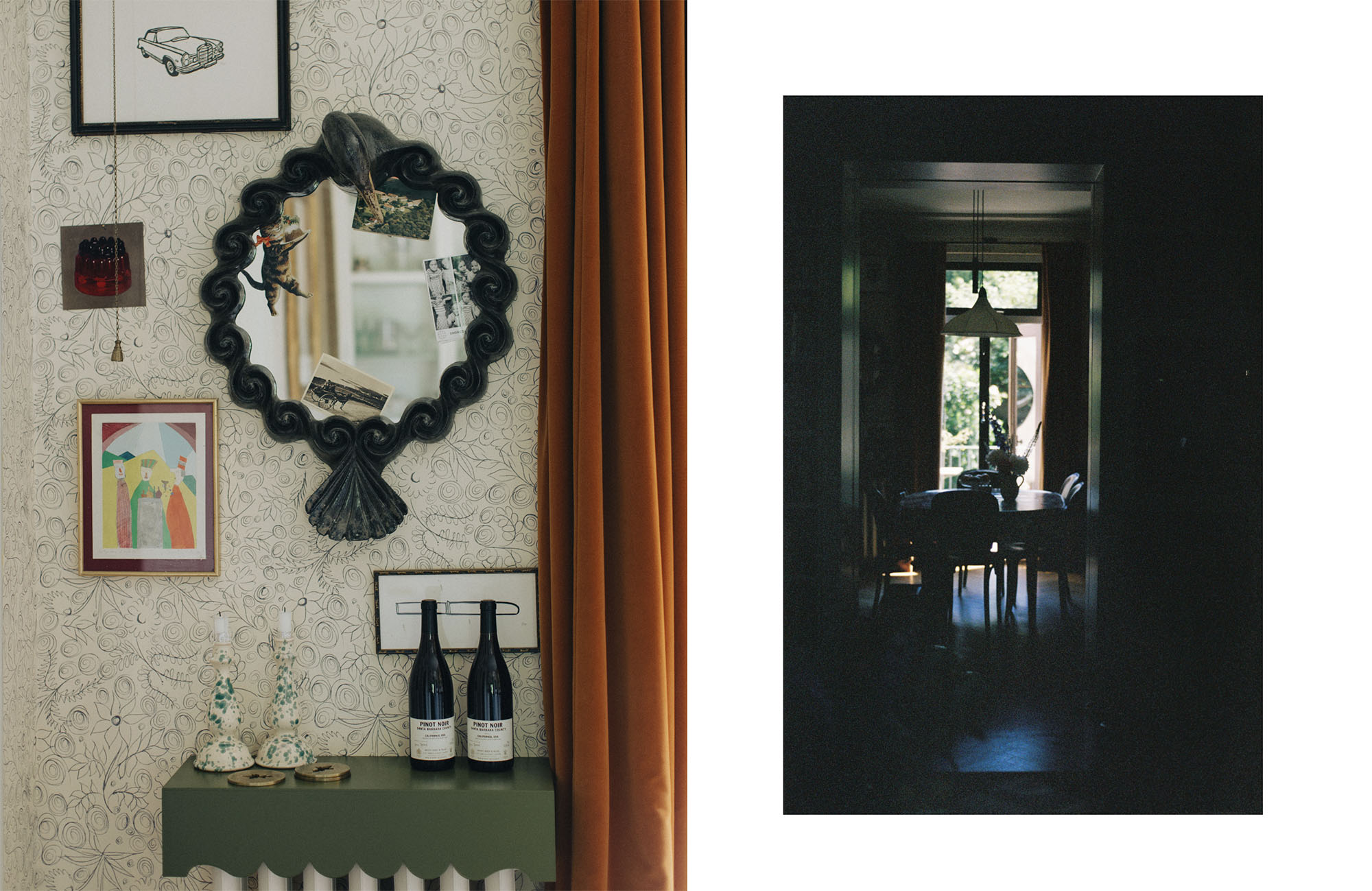
“I love reds and we just went on a road trip to California where I discovered Californian Pinot Noir. There’s a winery called Au Bon Climat, and we actually drink their wine here quite often. Visiting them while we were there was really fun. With white, though, I prefer French, like a Sancerre.
Who’s your favourite painter?
“So many. Nils Sture, Ivar Arosenius, Anders Zorn. I just went to the Zorn House a few weeks ago, it was incredible. And of course, John Singer Sargent, he was contemporary with Zorn, and their styles are quite similar. I’m more drawn to non-abstract work. Most of the abstract pieces in our home come from John. His grandmother had an amazing art collection.
What’s your best place to travel to?
“I love going to Skåne, to the farm where our house is. One of my favourite cities is Florence. I lived there for a year after finishing school. Florence is just so inspiring, the architecture, art, history, the food and the sheer number of little makers.It’s also not that expensive, and shopping there is the most fun. Because it’s quite small, you can walk everywhere and feel like you know the city well. Every time I go, I still discover something new. There are amazing vintage clothes, too. I think it’s my favourite city.
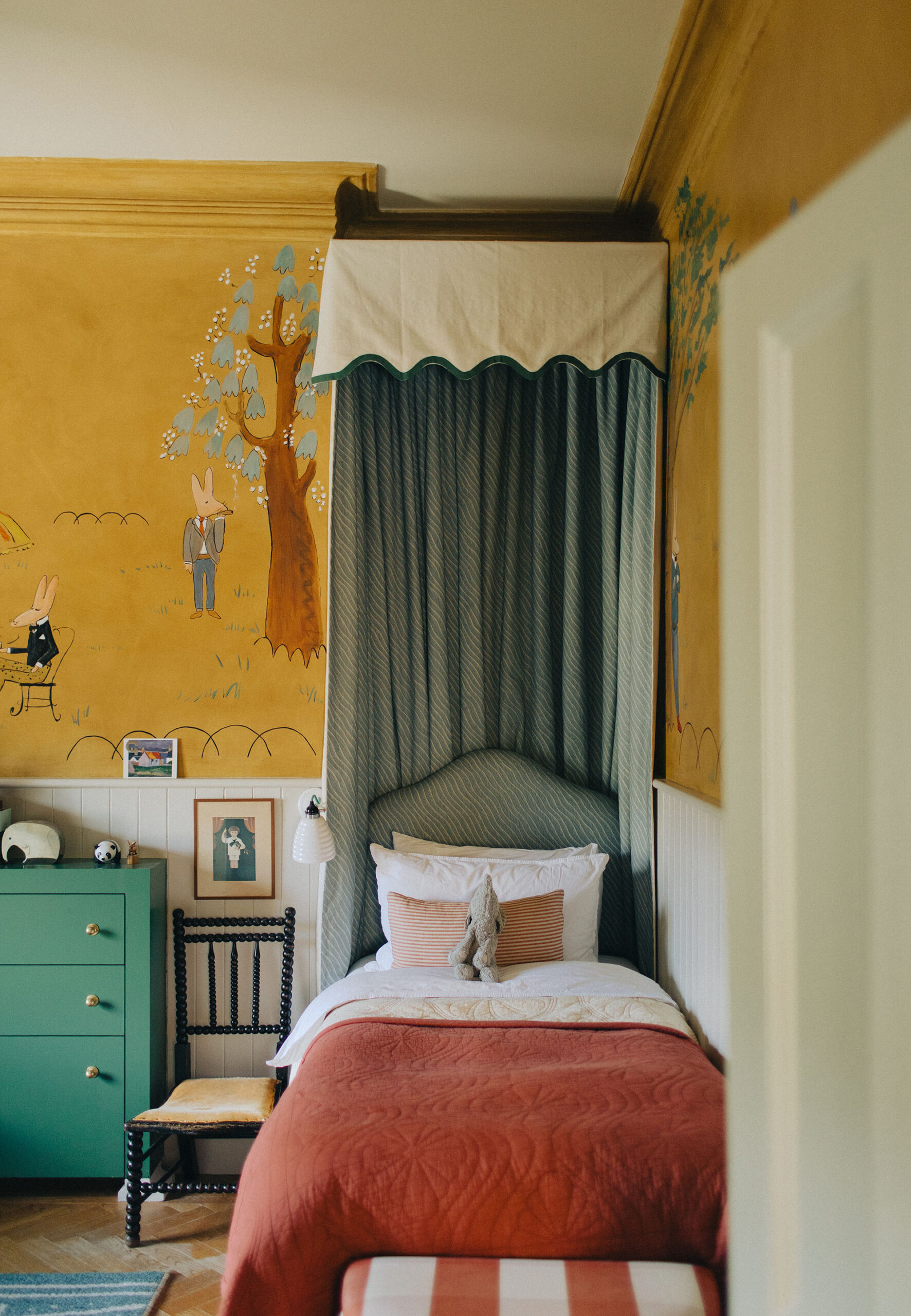
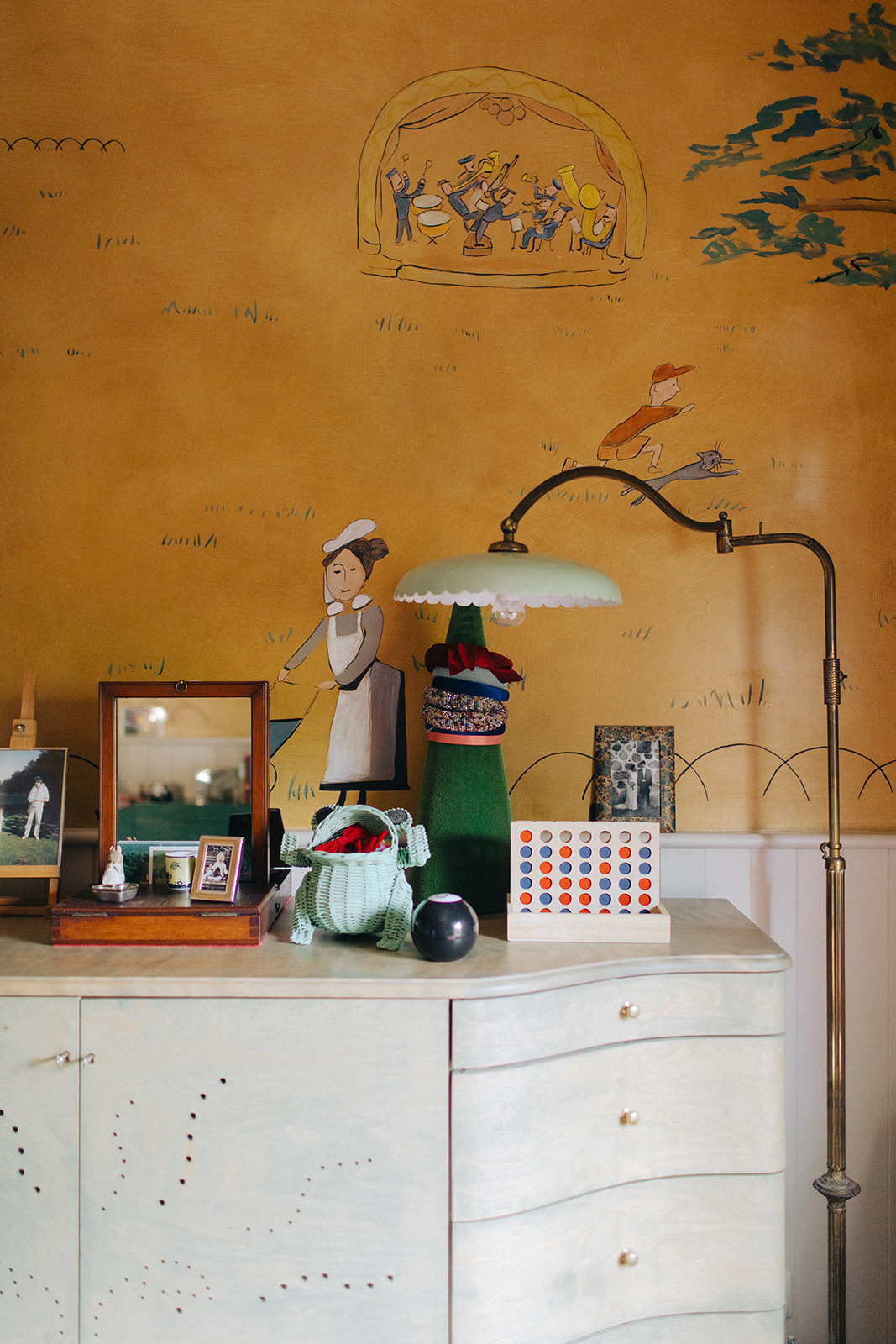
When designing a room for her daughters, Gurli and Alma, Beata Heuman created a hand-painted mural inspired by Bemelmans Bar, featuring playful rabbits sipping martinis. The room, now iconic and featured on her book cover Every Room Should Sing, includes twin beds with storage drawers and half-moon poufs.
Beata prioritized smart, child-friendly design: a low birch wardrobe with playful lion-face cutouts preserves the mural and keeps storage accessible. She places beds in corners to maximize play space and avoids built-ins so the room can evolve. Durable wool rugs, natural fabrics, and sturdy vintage pieces keep the space practical, unfussy, and full of character.
How do I make a room sing?
“Not everything can shout. It’s important to have some white walls. There needs to be harmony, but also a bit of dissonance or tension between the things you put in. It’s about finding that balance.
And how do I find that balance?
“Well, it’s about thinking of the whole. And then making sure you add pieces that create a certain tension, but in a gentle way. For me, when a room really sings, it’s when you feel your heart lift a little. There’s energy in the room, but it doesn’t feel heavy. It feels uplifting. That comes through colour combinations, textures, and also mixing styles, old and new, something inexpensive with something more valuable. It’s about combinations. And of course it means different things to different people.
Like a smörgåsbord, a bit of everything. That’s what excites me when I walk into a room. That’s when I think it sings, when you have that mix of colours, styles, high and low, all together.
Which room in this house do you enjoy most?
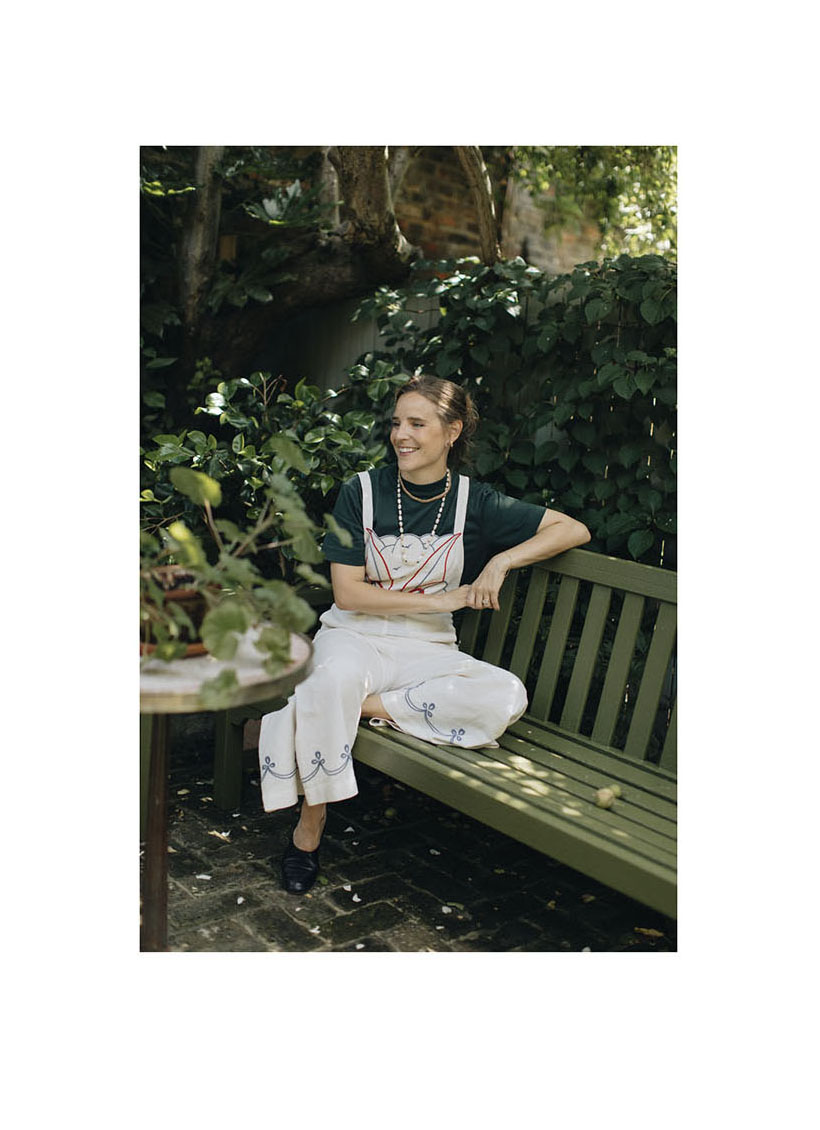
“I’m always adding something new. I just hung some pictures in the bathroom, so right now I’m excited about that. But overall, probably the kitchen and dining area, since that’s where we spend most of our time. Lately though, it might be the garden. We redid it properly last year, and now, with the benches, it almost feels like another room. I love sitting out here.
Do you have an object at home that’s your absolute favourite?
“Yes. When I worked with Nicky and another colleague, Colette, each of them bought one of these paintings. I didn’t have any money at the time, so I couldn’t. But I was always sad about it. I really wished I had, I thought about it a lot. Later when Nicky sold his country house, he included the painting in the sale. So that was my chance, I went to the auction, and I got it! That one means so much to me.
Is there a word that describes your style?
“I’d say my style is considered. I think a lot about what goes into a space. I like creating a backdrop that my clients can keep adding to after I leave — because homes should grow and change, just like the people in them. So it’s thoughtful, but still fresh and full of energy. ×
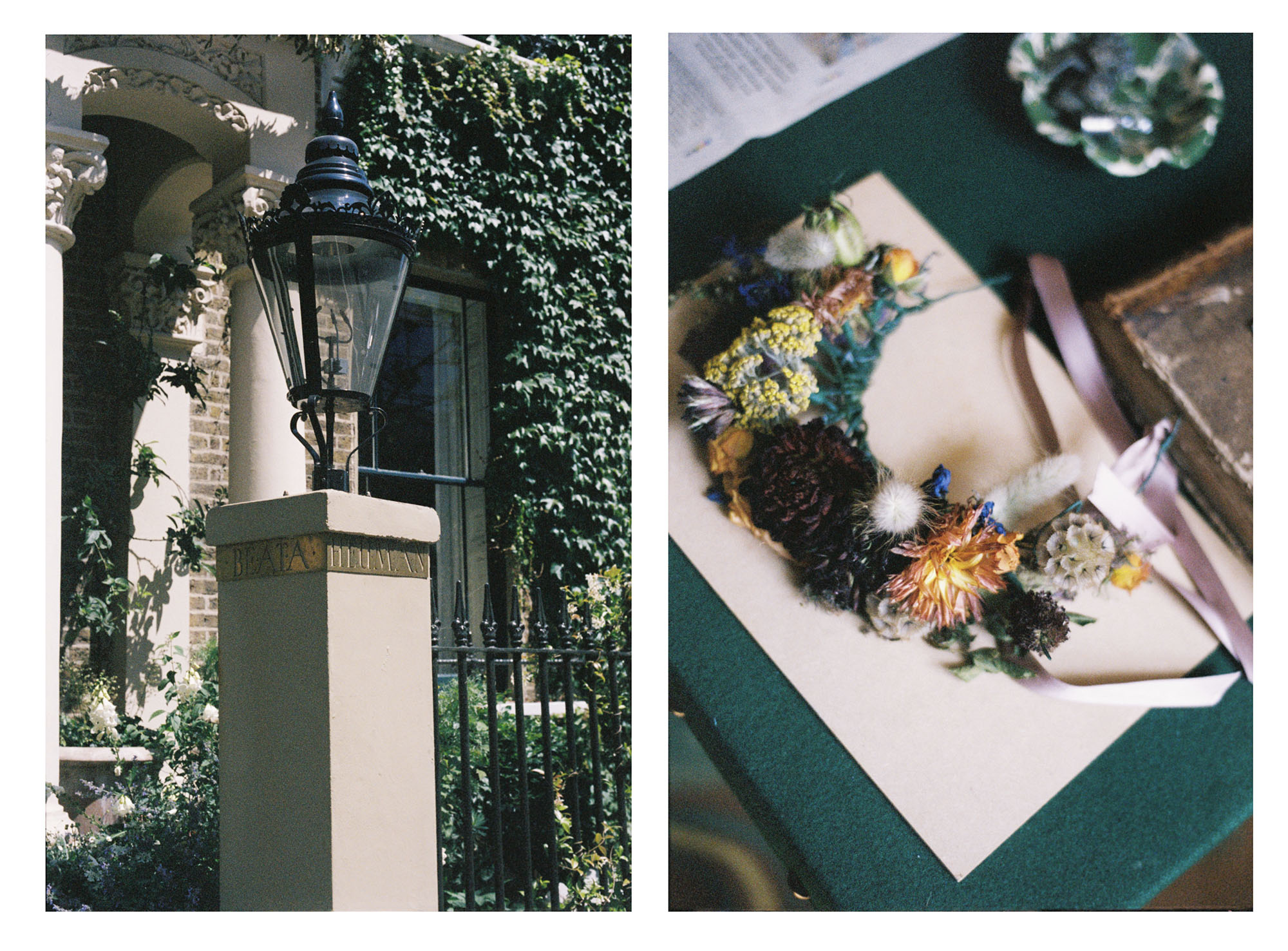
188 Hammersmith Road. “I don’t really want to call it a showroom, because it’s more than that. It’s a studio, an office and it’s like a home for the team, a place for us to feel inspired.”
A flower crown for midsummer celebration.
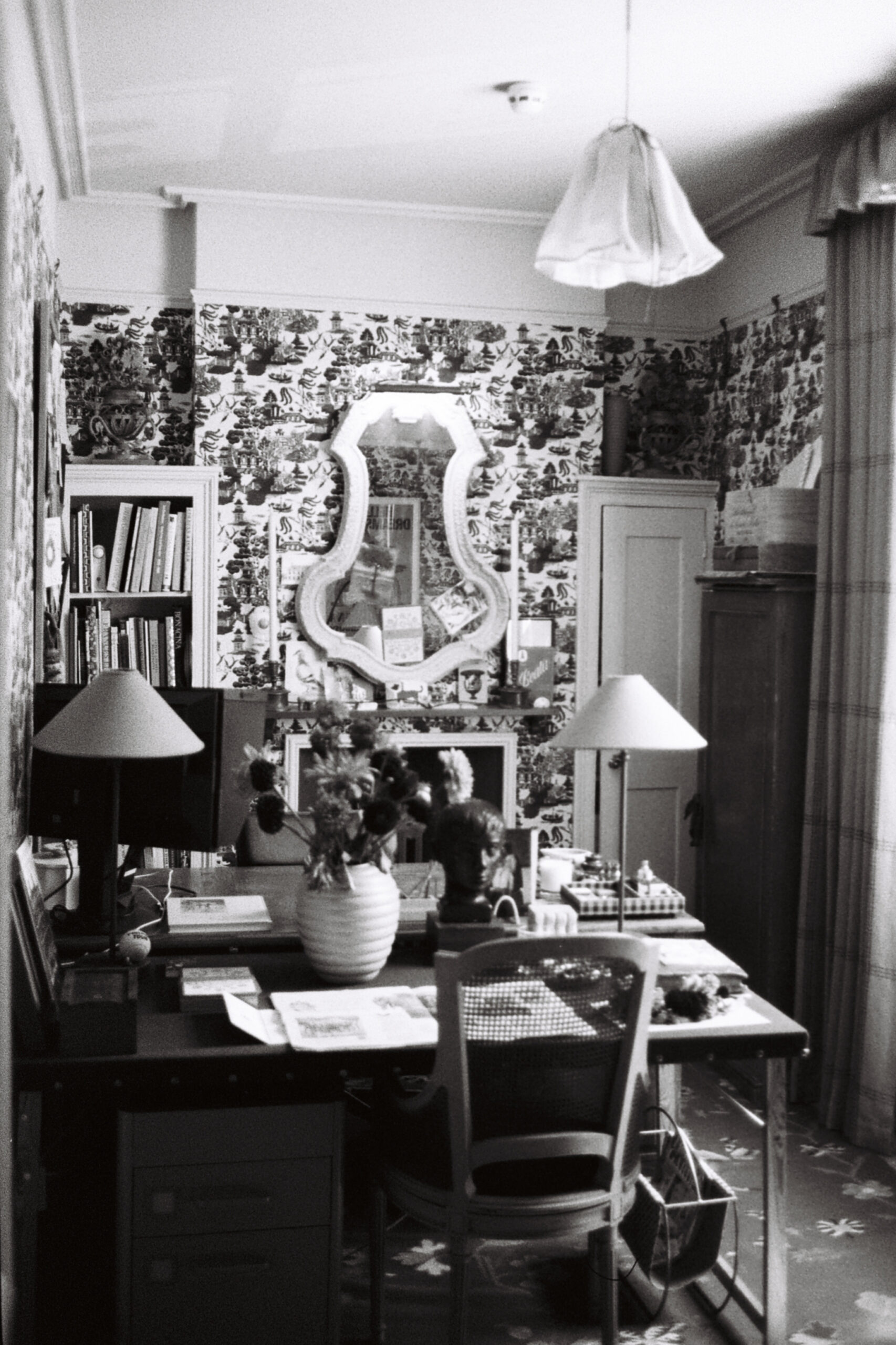
Beata’s office at 188.
Thank you Beata!
Article first published in The Way We Play Magazine No8 2025.